Mid-Drive vs Hub Motor: What Actually Matters for Daily Commuting
The practical truth about which motor type actually makes a better daily commuter.
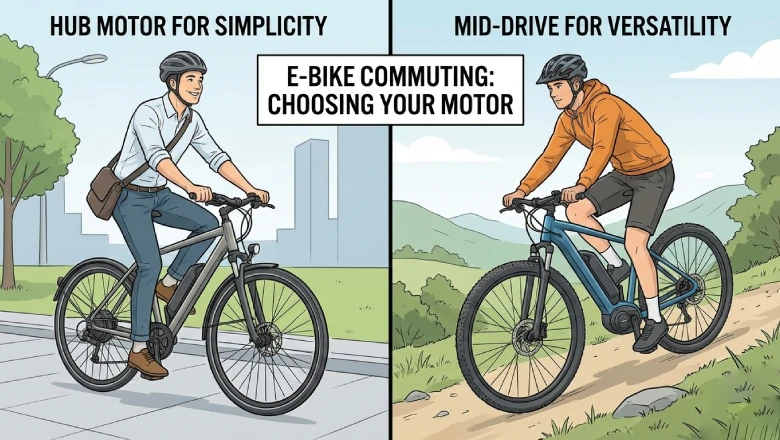
When people start researching e bikes for commuting, one of the first technical terms they encounter is motor type. Most product listings and buying guides separate e bikes into two main categories. These are mid-drive motors and hub motors.
At first, this distinction can feel important but unclear. Many explanations focus on performance language or cycling specific terms that are hard to apply to everyday use. For someone who is simply trying to replace car trips or make commuting easier, that approach creates confusion instead of clarity.
This article explains the difference between mid-drive and hub motors in practical terms. The goal is not to recommend one option universally, but to explain how each motor type affects daily commuting, maintenance, cost, and ease of ownership. All comparisons are based on manufacturer specifications, design intent, and common use cases, not personal riding experience.
What Problem the Motor Is Actually Solving
Most commuters are not choosing an e-bike to maximize performance. They are choosing one to reduce effort, save time, or make certain trips more manageable. That means the motor only matters if it changes how reliable or convenient the bike is to use day after day.
For commuting, the most relevant concerns tend to be consistency and predictability. Riders want to know whether the bike will handle their route without stress, whether it will require frequent maintenance, and whether it will add unexpected costs over time. Comfort and speed matter, but only to the extent that they support regular use.
Understanding motor type helps because it influences how power is delivered, how the bike wears over time, and how much attention the rider needs to pay while riding. These differences are often more important than raw power numbers.
The Basic Mechanical Difference
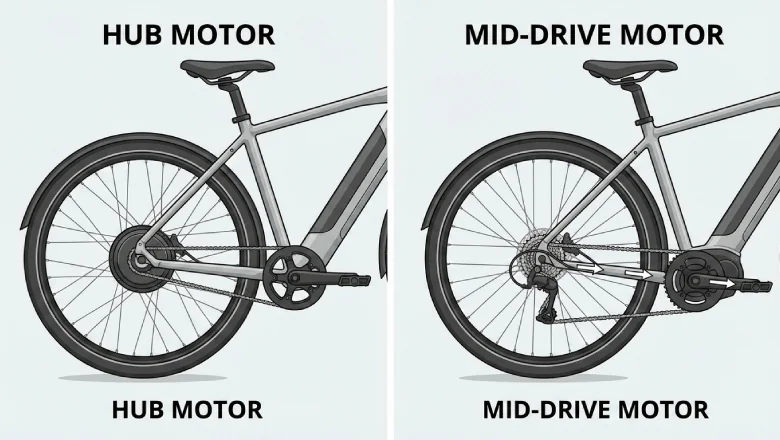
A hub motor is located inside the front or rear wheel. When the motor engages, it turns the wheel directly. The bike’s chain and gears function mostly the same way they would on a standard bicycle. The motor does not depend on gear selection to produce power.
A mid-drive motor is located near the pedals. Instead of powering the wheel directly, it sends power through the chain and gears. This means the motor works together with the drivetrain. Changing gears affects how the motor behaves, just as it affects how hard it feels to pedal.
This design difference is the foundation for most of the tradeoffs between the two systems.
How Hills and Terrain Affect the Choice
Mid-drive motors are often described as better for hills. This is because they can use the bike’s gears to stay in an efficient range while climbing. On paper, this allows the motor to maintain steady output without drawing excessive power from the battery. This can be helpful on long or steep climbs.
Hub motors approach hills differently. They rely more on the motor’s own power rather than gear multiplication. On flat ground, this difference is rarely noticeable. On extended climbs, a hub motor may draw more energy and feel less efficient, especially if it is paired with a smaller battery.
For commuting, this distinction matters most when hills are unavoidable. Riders who cross bridges, climb long grades, or carry additional weight may benefit from a mid-drive system. For riders on mostly flat routes, the practical difference is often smaller than expected.
Maintenance and Component Wear
Maintenance is an area where motor type has a direct impact on ownership experience.
With a mid-drive motor, both human power and motor power travel through the chain and cassette. Over time, this increased load can cause drivetrain components to wear faster. Chains and cassettes may need replacement more frequently, especially for riders who commute daily or use higher assist levels.
Hub motors keep the drivetrain separate from the motor’s output. The chain and gears handle only the rider’s pedaling force. This typically results in slower wear and lower maintenance costs over time.
For commuters who value simplicity and lower ongoing expenses, this difference can be more important than performance characteristics.
Consistency and Ease of Use
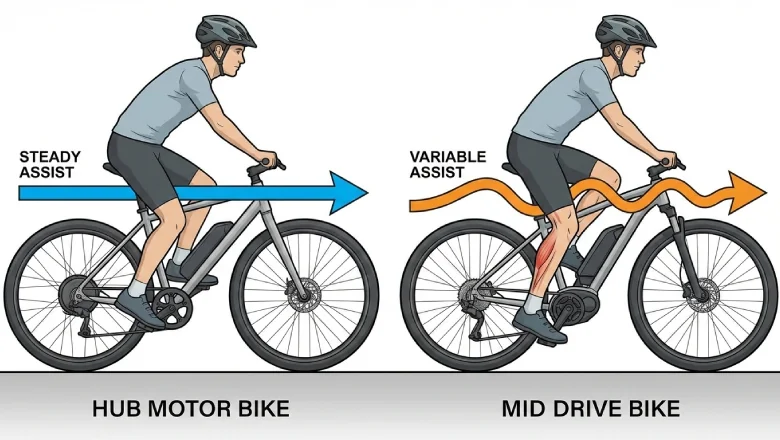
Mid-drive systems respond to pedaling input and gear choice. This can make the assist feel dynamic, but it also means the rider needs to pay attention to shifting. Using the wrong gear can reduce efficiency or place extra strain on components.
Hub motors deliver power more consistently. When assist engages, the bike moves forward with a predictable level of support. This behavior does not change significantly based on cadence or gear selection.
For daily commuting, many riders prefer consistency. A system that behaves the same way in traffic, in work clothes, and under time pressure tends to be easier to live with.
Cost and Value Considerations
In most cases, mid-drive e-bikes cost more than comparable hub motor models. This reflects higher motor costs and more complex integration. At lower price points, hub motor bikes often offer larger batteries or better overall component value.
Entry level mid-drive bikes sometimes make tradeoffs to reach a certain price, such as smaller batteries or basic components. This does not make them bad products, but it does affect overall value.
For buyers with a fixed budget, it is important to consider what features are being prioritized. A hub motor bike may provide a more balanced package for commuting within the same price range.
What Often Gets Overemphasized
Some factors receive a lot of attention but have limited impact on daily transportation.
Subjective descriptions like ride feel vary widely between riders and are difficult to apply universally. Prestige associated with motor placement does not affect reliability or utility. Peak torque numbers are meaningful only when considered alongside terrain, weight, and battery capacity.
For commuting, these details matter less than durability, predictability, and cost control.
Choosing Based on Real Use
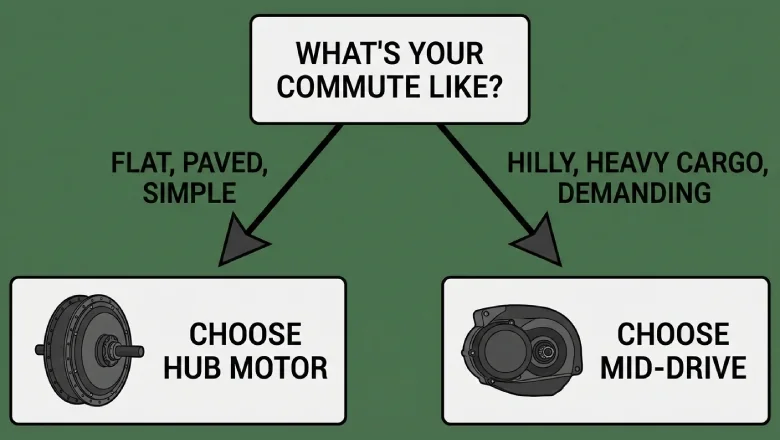
A mid-drive motor may be a better fit for riders with long hills, heavy cargo, or demanding terrain who are comfortable with higher maintenance. It offers efficiency advantages when those conditions are present.
A hub motor may be a better fit for riders on flat or moderate routes who want a straightforward, low maintenance system with consistent behavior. For many commuters, this aligns more closely with daily needs.
There is no universal best motor type for commuting. Each system solves different problems. The key is identifying which problems you actually have.
For many riders, hub motors quietly meet most transportation needs without added complexity. Mid-drive motors offer clear benefits in specific situations, but those benefits are most valuable when the route demands them.
Framing the decision around your commute, rather than around performance language, leads to a more realistic and satisfying choice.